
.png)

Out of State Rental Management in 2026: A How-To Guide
Table of Contents
Why Out of State Rental Management Fails Without a System
Step 1: Build Your Remote Landlord TeamVetting Local Contractors and Vendors
Vetting Local Contractors and Vendors
Step 2: Know the Out of State Landlord Legal RequirementsA Practical Legal Compliance Checklist for Remote OwnersThe Unique Legal Risk of Non-Resident Status
A Practical Legal Compliance Checklist for Remote Owners
The Unique Legal Risk of Non-Resident Status
Step 3: Use a Rental Property Maintenance Checklist
Step 4: Automate Rent Collection and Tenant Screening
Step 5: Plan for Disasters and Exit StrategiesInsurance Nuances for Non-Resident OwnersA Disaster Management Protocol for Remote OwnersExit Strategy Planning for Remote Assets
Insurance Nuances for Non-Resident Owners
A Disaster Management Protocol for Remote Owners
Exit Strategy Planning for Remote Assets
Hiring a Property Management Company vs. Going Solo
Conclusion: Your Remote Management Action Plan
Frequently Asked Questions
Last Updated: September 5, 2026
Out of state rental management is the practice of overseeing and operating a rental property from a different state than where the asset is located. It requires a deliberate system of local partnerships, remote communication tools, and strict legal compliance. At SRQ Properties, we have spent years refining these systems, and the single biggest factor separating success from failure is structure.
Most owners who fail at out of state rental management do so because they treat a distant asset like a local one, reacting to problems instead of preventing them. The solution is to build a system where every function of ownership has a designated owner, a documented process, and a communication channel that works across time zones.
Why Out of State Rental Management Fails Without a System
The core reason remote ownership breaks down is the absence of defined roles and response protocols. When an emergency call comes in at 9 p.m., you need to know exactly who answers, what their authority is, and what the spending limit is before they act.
A reliable system addresses three things: decision rights, response times, and documentation. Decision rights clarify who can approve what. Response times set expectations for tenant communication, which directly impacts lease renewals and vacancy. Documentation ensures that every repair, payment, and inspection has a record.
Watch Out The most expensive mistake remote owners make is waiting to build their vendor network until something breaks. At that point, you are at the mercy of whoever answers the phone, and you have no way to verify their pricing or quality. Vet your team before you need them.
Step 1: Build Your Remote Landlord Team
Your first task is to identify the people who will act as your eyes, ears, and hands on the ground. At minimum, you need a licensed general contractor or handyman, a plumber, an electrician, and an HVAC technician, plus a trusted person for physical inspections and move-in/move-out walkthroughs.
Do not rely on a single point of contact, because if that person goes on vacation or retires, your entire operation stalls. Build redundancy into every critical role and store contact information in a shared document your property management software can reference.
Vetting Local Contractors and Vendors
Vetting is where most DIY remote landlords cut corners. Start by verifying that each contractor is licensed and insured, asking for a certificate of insurance directly from their carrier. Then check their status with the state licensing board and read recent reviews on multiple platforms.
A common mistake is hiring the cheapest bid without checking whether the contractor has experience with rental properties specifically. Rental work requires speed and communication, not just craftsmanship. Ask for references from other landlords and confirm the contractor will communicate via email or a work order system.
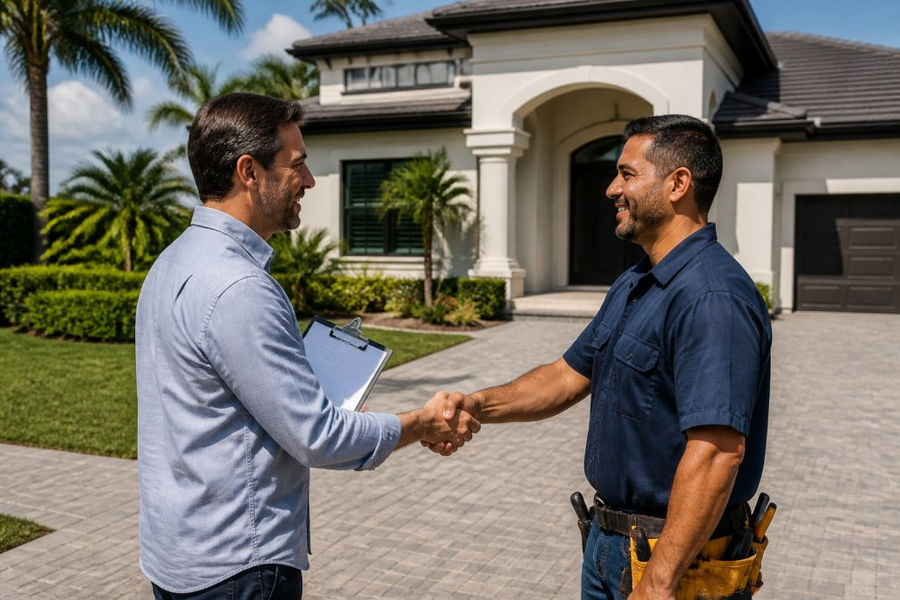
Pro Tip When interviewing a contractor, ask how they handle change orders. A contractor who works with remote owners should be comfortable sending a photo and a written quote for approval before doing extra work, not just billing you at the end of the month.
Step 2: Know the Out of State Landlord Legal Requirements
Out of state landlord legal requirements are not optional, and they vary significantly by state and locality. While you are subject to the laws of the state where the property sits, not where you live, you must also comply with federal fair housing regulations. The U.S. Department of Housing and Urban Development (HUD) fair housing guidelines prohibit discrimination based on race, color, national origin, religion, sex, familial status, or disability.
Every state has its own landlord-tenant act governing security deposits, eviction procedures, and entry notice rules. Florida, for example, requires specific timelines for returning security deposits and has a distinct eviction process that does not allow self-help measures like changing the locks. Your lease and management practices must comply with these statutes.
A frequent compliance failure for remote owners is the handling of security deposits. Many states require deposits to be held in a separate interest-bearing account and returned within a strict deadline, often 15 to 30 days after the lease ends. Missing that deadline can result in penalties, including forfeiting the deposit. Work with a local real estate attorney to review your lease and deposit handling process before signing your first remote tenant.
A Practical Legal Compliance Checklist for Remote Owners
Work through this checklist with a local attorney who specializes in landlord-tenant law in the property's state:
State Registration Requirements: Some states and municipalities require landlords to register the property or obtain a rental license. Confirm whether this applies to your property and renew it on schedule. Failure to register can lead to fines and can complicate eviction proceedings.
Local Ordinances: Beyond state law, cities and counties often have their own rules on occupancy limits, noise, and property maintenance. A property that is compliant with state law can still violate a local ordinance, leading to citations and tenant complaints.
Security Deposit Rules: Verify the maximum amount you can collect, the required bank account type (e.g., interest-bearing), the timeline for returning the deposit, and the specific documentation needed for any deductions. Some states require an itemized list of damages within a set number of days.
Eviction Process: Understand the exact steps required to evict a tenant in the property's state. This includes the required notice period, the court where you must file, and the timeline for a hearing. Self-help evictions, such as changing locks or shutting off utilities, are illegal in every state and can expose you to significant liability.
Entry Notice Rules: Each state has specific rules about how much notice you must give a tenant before entering the property for an inspection or repair. This notice must be in writing and delivered in a specific manner. Your local property manager or inspector must follow these rules precisely to avoid violating the tenant's right to quiet enjoyment.
Fair Housing Compliance: Your tenant screening criteria must be applied consistently to every applicant. Document your criteria in a written policy and keep records of every application, including the reason for denial. This documentation is your primary defense in a discrimination claim.
Business Entity Requirements: Some states require out-of-state owners to register a foreign LLC or corporation to do business in that state. Operating without this registration can invalidate your ability to file a lawsuit or enforce a lease in local courts.
Watch Out Do not rely on a property management company to handle all legal compliance. You are ultimately responsible for the property, and a management company's error can still result in a lawsuit against you. Review their compliance procedures and ask for proof of their own liability insurance.
The Unique Legal Risk of Non-Resident Status
Being an out-of-state owner introduces a specific legal risk: being deemed a "foreign" entity in the property's state. If you are not registered to do business there, you may not be able to use its courts to enforce a lease or evict a tenant.
Work with a local attorney to determine whether you need to register your ownership entity in the property's state. This registration is often a simple annual filing but is essential for protecting your legal rights.
Keep a digital copy of every legal document related to the property, including the lease, tenant correspondence, and legal filings. This documentation is your lifeline if a dispute escalates to court and is essential for tax preparation.
Step 3: Use a Rental Property Maintenance Checklist
Proactive maintenance is the cheapest insurance you can buy for a remote asset. A rental property maintenance checklist helps you stay ahead of small issues that become large, expensive problems. It should cover seasonal tasks such as servicing the HVAC system before summer, checking for roof damage after storm season, and testing smoke detectors and carbon monoxide alarms.
Your checklist should include a documented inspection cadence. Your local inspector should walk the property at least twice a year, once between tenants and once during an active lease. Between formal inspections, encourage tenants to report issues through a portal and follow up on every request within 48 hours.
Maintenance Task | Recommended Frequency | Who Handles It |
HVAC filter replacement | Every 3 months | Tenant or local vendor |
Full property inspection | Every 6 months | Local inspector or PM |
Roof and gutter check | After major storms | Vetted contractor |
Smoke detector test | Every 6 months | Local inspector |
Exterior pest control | Quarterly | Licensed vendor |
Tailor the frequency to your property's age, location, and climate, and keep a digital log of every completed task. This log becomes your proof of diligence if a dispute arises over maintenance responsibilities or deposit deductions.
Step 4: Automate Rent Collection and Tenant Screening
Automation removes the two biggest headaches in remote ownership: chasing rent and guessing about applicants. For rent collection, use a property management software platform with automated payments. This allows tenants to pay via ACH or credit card and automatically applies late fees when a payment is missed.
Tenant screening is equally critical. A standardized process that checks credit history, criminal background, and income verification is non-negotiable. The Equal Credit Opportunity Act (ECOA) requires that you apply the same screening criteria to every applicant, so create a written policy and stick to it. Look for a debt-to-income ratio that supports the rent, and verify employment with a phone call, not just a pay stub.
Key Takeaway Automation is not just about convenience; it is about consistency. When your screening criteria and rent collection processes are automated, you remove the risk of a fair housing violation or a discrimination claim that comes from making decisions on a case-by-case basis.
Step 5: Plan for Disasters and Exit Strategies
Remote owners face unique risks when a hurricane, flood, or fire strikes. You cannot board up windows or move furniture, so you need a disaster management protocol activated the moment a warning is issued. This protocol should include a chain of command, a pre-approved emergency spending limit, and a list of storm-response vendors.
Your plan should also address your exit strategy. Many investors buy a rental intending to hold it for a decade, but life changes. Define your exit criteria now: at what vacancy rate, cap rate decline, or major repair cost will you sell? Having this written down prevents emotional decisions later.
Insurance Nuances for Non-Resident Owners
Standard landlord policies often exclude flood damage, and some carriers have strict requirements for properties that are vacant for more than 30 days. Review your policy annually with an agent who understands non-resident ownership, and consider a loss of use rider to cover rent if the property becomes uninhabitable. According to the National Association of Insurance Commissioners (NAIC) guide on landlord insurance, you should also confirm that your policy covers liability for injuries that occur on the property, not just damage to the structure.
Here is what you need to verify with your insurance agent before a disaster strikes:
Vacancy Clauses: Most landlord policies limit coverage if the property is vacant for more than 30 or 60 days. If you have a long turnover between tenants, or if you are preparing the property for sale, you may be uninsured without knowing it. Ask your agent for a vacancy endorsement that extends coverage.
Ordinance or Law Coverage: If a fire or storm damages your property, local building codes may require you to rebuild to a higher standard. Standard policies often exclude the cost of bringing an older building up to code. Ordinance or law coverage pays for this additional expense, which can be substantial.
Loss of Rent / Fair Rental Value: This coverage reimburses you for lost rental income while the property is being repaired. Confirm the coverage limit is sufficient to cover your mortgage and operating expenses for at least 12 months, as disaster repairs can take longer than expected.
Sewer Backup and Water Damage: Many policies exclude sewer backup and groundwater flooding. For a property you cannot inspect after a heavy rain, this coverage is essential. A small endorsement can save you from a five-figure cleanup bill.
Liability for Off-Premises Injuries: If a contractor is injured on your property, their claim may come back to you if they are not properly insured. Require every vendor to provide a certificate of insurance naming you as an additional insured. This is a simple step that most remote owners overlook.
Pro Tip Ask your insurance agent to send you a written summary of every exclusion in your policy. If they cannot explain why a specific exclusion exists, ask them to add an endorsement to remove it. The cost of these endorsements is typically a fraction of the cost of a single uncovered claim.
A Disaster Management Protocol for Remote Owners
When a hurricane or wildfire is forecast, you cannot be on the ground to protect your property. Your protocol must be pre-written and rehearsed. Here is a step-by-step framework you can adapt:
Pre-Storm Vendor Activation: Have a pre-approved list of storm-response vendors (tree removal, board-up services, roofing) and a spending limit for each. When a warning is issued, your local contact calls these vendors to schedule a pre-storm inspection and secure the property.
Tenant Communication Plan: Send a written notice to tenants with your emergency contact number and instructions on how to report damage. Ask them to document the condition of the property before and after the storm with photos.
Post-Storm Assessment: Within 24 hours of the event, your local inspector or property manager must visit the property to assess damage and take photos. This documentation is critical for your insurance claim.
Claim Filing: File your insurance claim within 48 hours of the event. Take detailed notes of every conversation with the claims adjuster, and keep a log of all repair costs and temporary housing expenses for your tenants.
Temporary Repairs: Authorize your local vendor to perform emergency repairs to prevent further damage, such as tarping a roof or boarding up windows. Keep all receipts, as these are reimbursable under most policies.
Exit Strategy Planning for Remote Assets
Most guides focus on operations, but few discuss how to prepare an out-of-state property for a profitable sale from afar. Your exit strategy is about making the property attractive to buyers while you are not there to manage the process.
Start by defining your exit criteria in writing. A common pattern is to sell when cash flow turns negative for three consecutive months or when a major repair exceeds 25% of annual rental income. Having these numbers written down prevents emotional decisions when a large repair bill arrives.
Prepare the property for sale long before you list it:
Maintain a Clean Digital Record: Keep a file of every major repair, inspection, and upgrade. Buyers and their agents will ask for this documentation, and having it ready speeds up the sale process.
Address Deferred Maintenance: Use your local vendor network to fix small issues before listing. A property that shows well sells faster and at a higher price, even if you are not there to host open houses.
Work with a Local Listing Agent: Choose an agent who has experience selling investment properties and who is comfortable communicating with you via email and video calls. Ask for a marketing plan that includes professional photography and virtual tours, which are essential for out-of-state buyers.
Consider a 1031 Exchange: If you are selling to reinvest in another property, a 1031 exchange under IRS Section 1031 allows you to defer capital gains taxes. This is a powerful tool for remote owners who want to move their capital to a different market without a tax hit.
Key Takeaway Your exit strategy is not a plan to sell; it is a plan to maximize the value of your asset when you do. By preparing the property for sale from day one, you ensure that you can exit profitably on your timeline, not on the market's timeline.
Hiring a Property Management Company vs. Going Solo
The decision to hire a full-service management company comes down to your time, tolerance for risk, and portfolio size. Going solo keeps fees in your pocket but demands availability during business hours in the property's time zone and managing a vendor network from a distance. For a single unit this can be manageable; for multiple units across cities, the administrative burden grows quickly.
A full-service property manager handles the entire lifecycle: marketing, tenant screening, lease execution, maintenance coordination, and eviction filing. The trade-off is the management fee, which typically ranges from a percentage of the monthly rent. When comparing providers, ask about their communication response times, their vacancy rates, and their process for handling after-hours emergencies. The National Association of Residential Property Managers (NARPM) resources on hiring a manager advises owners to interview several firms and request references from other out-of-state clients.
For owners who want professional oversight without the DIY burden, a local partner is essential. SRQ Properties offers 24/7 availability with direct access to company owners, and our leadership team has experience at top national management companies. We combine local market expertise with systems for tenant screening, maintenance supervision, and rent collection. Pricing depends on your property type and service needs, so contact SRQ Properties for a quote.
Conclusion: Your Remote Management Action Plan
Managing a property from out of state is a test of your systems, not your luck. Start by building your local team and vetting every vendor before you need them. Then lock down legal compliance, automate rent collection and screening, and write your disaster and exit plans. If the operational load becomes too heavy, a professional management partner can take over the day-to-day work while you keep the equity growth and cash flow.
Get started with SRQ Properties and turn your distant asset into a stress-free investment. Our team handles the tenant screening, maintenance coordination, and legal navigation so you can focus on your next acquisition.
Frequently Asked Questions
How difficult is it to manage an out of state rental property?
Managing a property remotely is challenging because you cannot handle maintenance or emergencies in person. Without a system, response times slow down and small issues become costly repairs. The difficulty drops significantly when you build a reliable local team or hire a property management company. A clear communication plan and automated rent collection also reduce daily stress. Most owners find success by treating management as a business process, not a hands-on hobby.
What are the legal requirements for out of state landlords?
Out of state landlords must follow the landlord-tenant laws of the state where the property sits, not where they live. This includes registering the rental property with the local government, collecting and holding security deposits correctly, and following the state eviction process precisely. You must also comply with fair housing regulations when screening tenants. Many states require a registered agent for legal service if you do not live nearby. Ignoring these rules can lead to fines or losing a dispute in court.
How do you handle emergency maintenance for remote rental properties?
You need a clear protocol before a crisis happens. Establish a list of vetted local contractors who answer calls 24/7, including a plumber and electrician. Give tenants a written process for reporting emergencies and define what qualifies as one, such as a burst pipe versus a running toilet. Set spending limits so contractors can act without waiting for your approval. If you hire a management company, confirm they have staff on call for after-hours emergencies.
What are the benefits of hiring a local property management company?
A local company provides boots on the ground for daily operations, from coordinating repairs to handling tenant issues. They understand the local rental market, which helps price your unit to maximize rental income while minimizing vacancy. They also stay current on landlord-tenant law and handle legal compliance, including eviction filings. For owners with one or two units, a manager frees up time and reduces the pressure of remote oversight.
Contact SRQ Properties today


Comments