


Sarasota Property Management for Vacation Homes: 2026 Guide
Table of Contents
Full-Service Management: What Sarasota Property Management for Vacation Homes Covers
Vacation Rental Management Fees: What You Pay and What You Get
Short-Term Rental Regulations: Zoning, Licensing, and Compliance
Property Maintenance Checklist for Vacation Homes: Protecting Your Asset
Revenue Optimization: Dynamic Pricing and ROI for Vacation Homes
Switching to SRQ Properties: A Smooth Transition for Out-of-State Owners
Last Updated: September 17, 2026
Why Sarasota Vacation Homes Need Local Property Management
Managing a vacation home from three states away sounds fine until the first midnight plumbing emergency. Sarasota property management for vacation homes exists because coastal rentals demand local attention remote owners cannot provide, from storm prep to same-day turnover.
Full-Service Management: What Sarasota Property Management for Vacation Homes Covers
Full-service vacation rental management outsources every operational task a short-term rental requires, marketing, booking management, guest communication, cleaning, maintenance, and financial reporting, to one local company.

Marketing, Booking, and Guest Communication
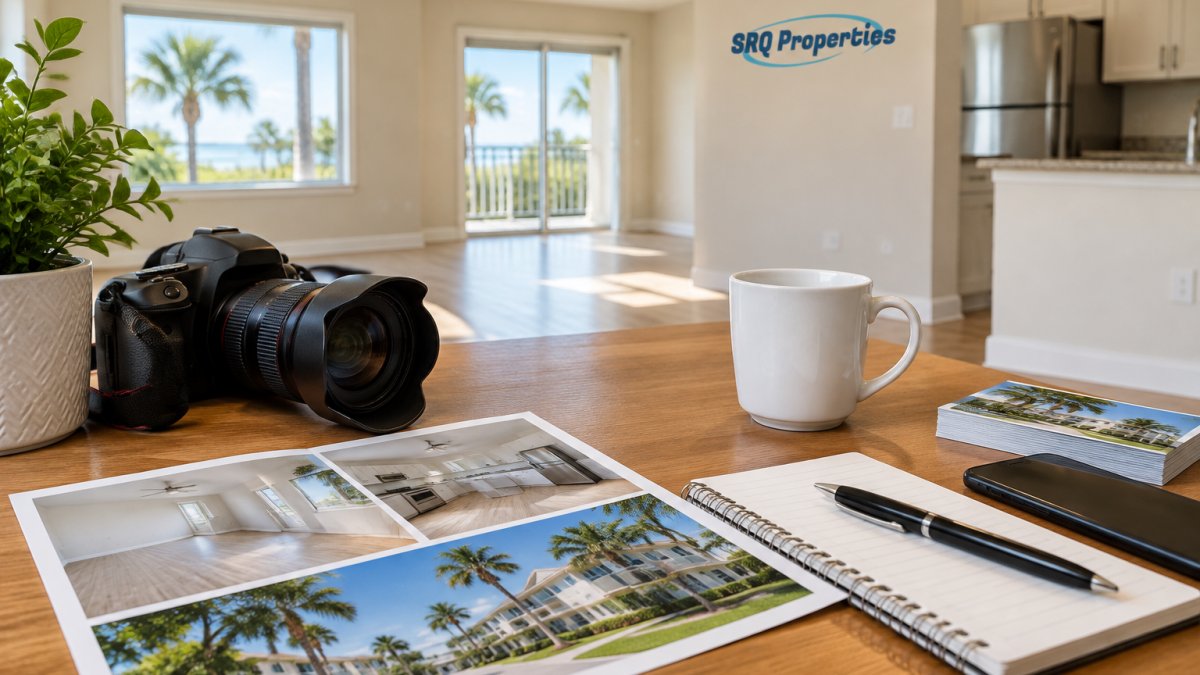
A strong marketing strategy goes beyond one platform: professional photography, optimized descriptions, and distribution across the channels travelers use. Booking management means calendars, double-booking prevention, and synced nightly rates.
Maintenance, Inspections, and Turnover Services
Turnover services are the operational backbone of a short-term rental. Between every stay, a property needs hospitality-standard cleaning, linen replacement, restocking, and a walkthrough that catches damage before the next guest arrives.
Pro Tip Schedule a professional property inspection quarterly, not just annually. In coastal climates, small issues like a slow leak or failing seal become expensive fast, and quarterly inspections catch them while they're still minor.
Vacation Rental Management Fees: What You Pay and What You Get
Most vacation rental management fees follow a commission model, a percentage of gross rental income, though some charge flat monthly fees or line-item charges. What matters is the gap between gross booking revenue and the check that reaches your bank account.
The Commission Range You Should Expect
For full-service short-term rental management in coastal markets, commission generally falls between 15% and 30% of gross rental revenue, with most established operators in the low-to-mid 20s. A 10% quote usually means less than full service; a 35% quote either bundles pass-through costs or prices above market.
Pass-Through Costs Owners Actually Pay
Commission is rarely the whole bill. Typical monthly owner statements include:
Cleaning and turnover fees, billed per stay, typically charged to the guest as a cleaning fee but reconciled against actual cleaner cost. If the guest pays $175 and the cleaner charges $200, the owner absorbs the difference.
Platform commissions, Airbnb, Vrbo, and Booking.com each take their own cut (roughly 3% host-only on Airbnb, higher on some Vrbo tiers). This is separate from your manager's commission.
Credit card processing, usually 2.5% to 3% of the booking total.
Transient rental taxes, collected from the guest and remitted to the county tax collector and the state. This is not your money, but it flows through your statement.
Maintenance markups, some managers add 10% to 20% on top of every vendor invoice. Ask directly whether markups apply and at what rate.
Supply restocking, paper goods, toiletries, coffee, and the small consumables guests expect. Usually $20 to $50 per turnover.
Reserve or contingency hold, some managers hold back a small percentage of each payout for future repairs.
Gross Revenue vs. Net Income: The Number That Matters
A property booking $80,000 in gross revenue does not put $80,000 in your pocket. A realistic breakdown for a mid-market coastal vacation home:
Line Item | Typical Share of Gross |
Gross booking revenue | 100% |
Platform commissions | 3%-15% |
Management commission | 15%-30% |
Cleaning and turnover | 8%-15% |
Maintenance and repairs | 5%-12% |
Supplies and restocking | 2%-5% |
Taxes and licensing | varies by jurisdiction |
Net to owner (before mortgage) | roughly 40%-60% |
Questions to Ask Before You Sign
Is the commission calculated on gross booking revenue or on net revenue after platform fees?
Are maintenance markups charged, and at what percentage?
Who pays for a turnover when a guest cancels late or checks out early?
Are there minimum monthly fees during the off-season?
What happens to the commission if a repeat guest books directly with you?
Is there a termination fee, and how much notice is required?
Pro Tip Request a sample owner statement from any manager you are considering. A real statement shows every line item, commission, cleaning, platform fees, taxes, and repairs, and tells you more in five minutes than an hour of sales conversation.
The real question isn't which fee is lowest, but which structure keeps your manager motivated to maximize revenue and minimize vacancy while keeping pass-through costs transparent. A slightly higher commission with aggressive marketing and dynamic pricing usually beats a low flat fee with passive management.
Short-Term Rental Regulations: Zoning, Licensing, and Compliance
Short-term rental regulations vary by jurisdiction, and in Florida they operate at three levels: state statute, county ordinance, and city rules. An owner can be fully compliant with the state and still be shut down by a city zoning code, so compliance work must happen before the first listing goes live.
The Three Layers of Regulation
State level. Florida statutes govern the framework for transient rentals, including how local governments may regulate them. The state also requires a business tax receipt (formerly an occupational license) for rental activity in most counties.
The Compliance Checklist
Before listing a property, an owner should be able to check every box below:
Confirm the property's zoning designation permits short-term rentals (some residential zones do not)
Register with the state for a business tax receipt
Register with the county tax collector for tourist development tax collection and remittance
Obtain any required city or municipal short-term rental permit
Confirm the property meets life-safety standards: working smoke detectors, carbon monoxide detectors where required, fire extinguisher, and clearly posted evacuation routes
Verify occupancy limits and parking rules for the specific address
Confirm the property carries the correct insurance, standard homeowner policies often exclude commercial rental activity, and a dedicated short-term rental or landlord policy is usually required
Post required notices inside the unit (emergency contacts, tax registration number, house rules)
Set up a system to collect and remit tourist development tax on every booking
Taxes You Will Owe
Short-term rental income faces several overlapping taxes:
Florida sales tax on the rental charge, collected from the guest and remitted to the state
County tourist development tax (also called resort tax), typically 5% to 7%, collected from the guest and remitted to the county tax collector
Federal income tax on net rental income, reported on Schedule E
Local business tax where applicable
Most professional managers collect and remit sales and tourist development taxes, but the legal obligation remains with the owner. If a manager fails to remit, the county comes after the owner.
What Happens If You Skip Compliance
Operating without required registration can trigger daily fines, retroactive tax assessments with penalties and interest, forced delisting from major platforms, and in some jurisdictions, guest refunds. Because some cities require neighbor notification before a permit is issued, a quiet launch is not always possible, and complaints about an unpermitted listing accelerate enforcement.
Watch Out A common and expensive mistake: assuming that because a neighbor rents short-term, the zoning allows it. Non-conforming use, grandfathered permits, and enforcement discretion mean two identical-looking properties on the same street can have different legal status. Verify the specific address, not the neighborhood.
How a Manager Handles Compliance for You
A competent local manager tracks ordinance changes, maintains registration and permit renewals, collects and remits tourist development tax on every booking, and keeps documentation current. This is one of the least glamorous and most valuable parts of vacation rental management, a missed renewal or unremitted tax bill can wipe out a season's profit.
Property Maintenance Checklist for Vacation Homes: Protecting Your Asset
A written property maintenance checklist turns reactive repairs into a scheduled system. Vacation homes take harder use than primary residences, and coastal properties face additional stress from humidity, salt, and storm season.
Use this checklist as a starting framework:
Monthly: Test smoke and carbon monoxide detectors, check for leaks under sinks, inspect HVAC filters
Quarterly: Professional property inspection, pool equipment service, pest control treatment, gutter clearing
Seasonally: Pressure wash exterior, inspect roof and flashing, service irrigation, deep clean upholstery and carpets
Annually: HVAC service, water heater flush, exterior paint touch-up, dock and seawall inspection if applicable
Before storm season: Secure outdoor furniture, trim trees near the structure, confirm emergency shutoffs, document property condition with photos
Seasonal and Preventive Maintenance for Coastal Properties
Coastal homes need a maintenance calendar built around weather, not just wear. Salt air corrodes hardware and fixtures faster than inland, humidity encourages mold in closed-up rooms, and storm season demands preparation well before the first advisory.
Revenue Optimization: Dynamic Pricing and ROI for Vacation Homes
Dynamic pricing adjusts nightly rates based on demand, seasonality, booking pace, and local events rather than holding rates steady year-round. It is the single most useful tool for improving rental yield.
Lever | What It Affects | How Management Helps |
Nightly rates | Revenue per booking | Dynamic pricing based on real market data |
Occupancy rates | Total booked nights | Marketing reach and calendar optimization |
Operating costs | Net rental income | Vendor relationships and preventive maintenance |
Vacancy loss | Missed revenue | Faster turnovers and gap-night filling |
Switching to SRQ Properties: A Smooth Transition for Out-of-State Owners
Switching property managers mid-season feels risky, especially for out-of-state owners who cannot supervise in person. The concern is real: you do not want to lose bookings or revenue during the handoff.
Key Takeaway The transition headache is real but short. The bigger risk is staying with a manager who isn't maximizing your nightly rates, filling your calendar, or protecting your asset. A structured handoff typically costs less than a year of underperformance.
Frequently Asked Questions
How much do vacation property managers charge in Sarasota?
Fees vary by property and service level. Most Sarasota vacation rental managers charge a percentage of monthly rent for full-service management, while short-term rentals may involve a commission on each booking plus cleaning and maintenance charges. Some managers also charge leasing fees or renewal fees. Because pricing depends on your property type, size, and the services you need, ask for a detailed quote. SRQ Properties can provide a customized proposal based on your specific vacation home.
What are the legal requirements for short-term rentals in Sarasota?
Short-term rental regulations in Sarasota County and the City of Sarasota include registration, zoning restrictions, occupancy limits, parking rules, and safety requirements such as smoke detectors and fire extinguishers. Some neighborhoods have additional HOA or condo rules. Florida also requires vacation rentals to collect and remit the 6% state sales tax plus any local tourist development taxes. A local property manager stays current on these rules and can help you register and stay compliant.
How can I improve the occupancy rate of my vacation rental?
Improving occupancy starts with dynamic pricing that adjusts nightly rates based on demand, season, and local events. Professional photos, detailed listings, and fast responses to inquiries also lift booking rates. Regular maintenance and positive guest reviews build repeat business. Many owners find that a property management company with local market expertise can optimize pricing and marketing to keep occupancy high without lowering rates too far. Ask for data on average occupancy for similar properties in your area.
What does a property maintenance checklist for vacation homes include?
A solid maintenance checklist covers monthly, seasonal, and annual tasks. Monthly items include checking smoke detectors, HVAC filters, plumbing leaks, and outdoor areas. Seasonal tasks involve hurricane preparation, gutter cleaning, and pool care. Annual items include deep cleaning carpets, inspecting the roof, and servicing major appliances. For coastal properties, add salt-air corrosion checks on metal fixtures and regular exterior painting. A property manager can handle these tasks and keep your home guest-ready year-round.

Comments